Huntsville, Alabama
They Called It Rocket City for a Reason.
Now Space Command Is Moving In.
Redstone Arsenal generates $36.2 billion in economic activity with 75+ tenant organizations and 45,000 daily workers. NASA Marshall builds the rockets. The Missile Defense Agency builds the shield. U.S. Space Command is relocating 1,400 jobs here. The $9.8 billion PAC-3 Patriot contract, the largest missile deal in Redstone history. We’re the onshore engineering team that keeps mission-critical code documented and audit-ready.

Vibe Coding Just Shipped to a System on Redstone Arsenal
AI-generated code ships fast and looks clean. Until the DCMA auditor or CMMC assessor finds the gap. When your code supports missile defense systems, rocket propulsion data, or Army materiel logistics, “it passed review” isn’t a defense. It’s an incident report.
Your Offshore Team Has Access to Missile Program Data
ITAR, CMMC, and DFARS don’t care where your contractor sits. If they’re touching export-controlled propulsion data, missile defense specifications, or Army program records from overseas, you’re disqualified from the contract and potentially facing criminal referral.
Your Support Platform Was Built Before Space Command Was Announced
Huntsville’s defense ecosystem is scaling faster than its code. With Space Command, the FBI expansion, and the Golden Dome initiative all converging, systems built for a smaller mission set are being asked to do things they were never designed for.
The Risks Nobody Talks About Until It’s Too Late
01
Vibe Coding Is a CMMC Violation Waiting to Happen
Your dev team is using AI to ship faster. That’s fine. Until it isn’t. AI-generated code doesn’t get reviewed the way human-written code does. It introduces logic errors, insecure dependencies, and auth gaps that slip through because nobody fully understands what was generated. In a city where contractors build software for the Missile Defense Agency, manage Army materiel logistics, and support NASA propulsion programs, one unchecked endpoint isn’t just a bug. It’s a CMMC assessment failure, a contract loss, and a potential compromise of systems that protect the homeland.
02
Offshore Isn’t an Option When Missile Data Is Involved
This isn’t about cost savings. It’s about eligibility and national security. ITAR prohibits sharing defense-related technical data with foreign nationals. CMMC requires protecting CUI within U.S.-controlled environments. The $9.8 billion PAC-3 Patriot contract, the largest missile manufacturing deal in Redstone history, makes the stakes concrete. If your offshore team has access to missile defense data, propulsion specifications, or Army program information, you’re not just exposed. You’re done.
03
Your Defense Platform Can’t Scale to the Incoming Mission
Space Command is bringing 1,400 jobs. The FBI has grown from 500 to 2,000 employees with capacity for 5,000 by 2028. The Army Space and Missile Defense Command has nearly quadrupled in size. Systems built for a smaller mission set are being asked to support exponentially larger operations. One bad update, one deprecated library, one new integration, and your logistics tracking, program management, or satellite support tools go dark at the worst possible time.
04
CMMC 2.0 Is Here and Redstone Contractors Are First in Line
CMMC is no longer theoretical. The DoD is requiring certified compliance as a condition of contract award. Level 2 requires third-party assessments against 110 NIST SP 800-171 controls. With Redstone Arsenal housing the Army Materiel Command, Missile Defense Agency, and now Space Command, the contractors supporting these missions are among the first facing mandatory assessments. Self-attestation is no longer sufficient for most contracts.
05
Cyber Insurers Are Asking Defense-Grade Questions
The days of filling out a form and getting a policy are over. Underwriters are asking technical questions that mirror CMMC controls. Do you have MFA everywhere? How is your code reviewed? What’s your incident response plan? Do you have a System Security Plan? If vibe-coded features are processing CUI or defense data with no audit trail, your claim could be denied. Or your premium just tripled.
06
You’re Automating the Easy Parts, Not the Expensive Ones
Most teams automate the easy stuff. The hard stuff (legacy Army logistics workflows, manual CMMC evidence collection, cross-system missile defense integrations, compliance documentation for re-compete proposals) stays manual because nobody wants to touch it. That’s exactly where your operational costs are hiding. We’ve seen defense contractors cut 40+ hours of manual work per week by automating the workflows everyone assumed were too complicated.
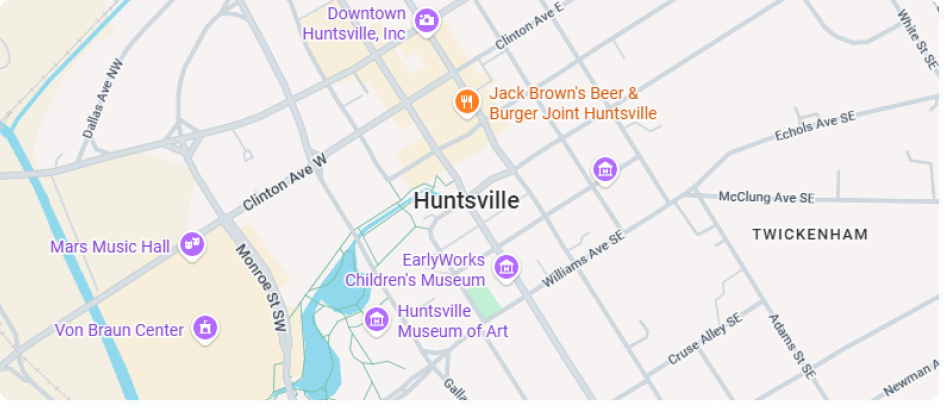
Built for the Companies That Keep This City Running
Huntsville isn’t just another defense town. It’s Rocket City, where Wernher von Braun’s team built the Saturn V, where NASA still builds the rockets that take humans beyond Earth, and where the U.S. Army manages its global materiel enterprise. Redstone Arsenal is a 38,000-acre Federal Center of Excellence with 75+ tenant organizations generating $36.2 billion in economic activity. That’s exactly where we operate best.
Missile Defense & Army Programs
The Shield Protecting the Homeland Is Engineered From Here
The Missile Defense Agency develops and fields the nation’s ballistic missile defense system from Redstone Arsenal. The Army Materiel Command manages global Army logistics and sustainment. The Army Space and Missile Defense Command has nearly quadrupled in size by integrating two Army Air and Missile Defense Commands. The $9.8 billion PAC-3 Patriot contract, announced in September 2025, is the largest missile manufacturing contract ever associated with Redstone. President Trump’s Golden Dome missile defense program could drive billions more in federal investment. Every system supporting these missions handles CUI or classified data under the most stringent compliance requirements in any industry. CMMC Level 2, NIST SP 800-171, ITAR, and DFARS create overlapping obligations where failure isn’t a business setback. It’s a threat to national defense.
Space Command & Space Operations
1,400 Jobs. A 427,000-Square-Foot Headquarters. The Code Has to Be Ready on Day One.
U.S. Space Command is relocating its permanent headquarters from Peterson Space Force Base in Colorado Springs to Redstone Arsenal. Approximately 1,400 jobs will transition over the next five years. A 450,000-square-foot temporary campus with three buildings is under construction. A 427,000-square-foot permanent facility on 60 acres has been planned. The Space Development Agency is already a tenant on the Arsenal. This relocation creates an unprecedented concentration of missile defense, space operations, and Army materiel under one installation. For every contractor supporting these missions, the compliance surface is expanding in real time. New systems must be built to CMMC standards from day one, and existing platforms must be assessed and hardened before they touch Space Command data.
NASA & Space Launch
Marshall Space Flight Center Still Builds the Rockets
NASA’s Marshall Space Flight Center has anchored Huntsville since Wernher von Braun’s team arrived in 1950. Marshall employs over 6,000 workers developing propulsion systems, including the Space Launch System that will carry Artemis astronauts beyond low Earth orbit. The center’s workforce has grown to 7,000 and manages testing, development, and contractor oversight for the nation’s most critical launch capabilities. Cummings Research Park, the second-largest research park in the United States at 3,843 acres, hosts the commercial space partners and technology companies that support Marshall’s mission. These programs handle NASA technical data, proprietary propulsion designs, and contractor deliverables under NASA security requirements and security attestation obligations.
Defense Contractors & Systems Integrators
Every Major Prime Is Here. The Supply Chain Must Keep Up.
Boeing, Lockheed Martin, Raytheon (RTX), and Northrop Grumman all maintain major Huntsville operations supporting Redstone Arsenal and Marshall Space Flight Center. Science and Engineering Services recently opened a 111,000-square-foot facility at Huntsville International Airport for rotary and fixed-wing aircraft support. QinetiQ US expanded into Huntsville to support the Army Aerial Target Systems contract. Mobius announced 75 new jobs at $137,000 average salary for space and missile defense work. The defense and aerospace industry employs over 70,000 workers with more than $6 billion in annual economic impact. Every tier of the supply chain carries CMMC obligations flowing down from the primes. The companies winning contracts in 2026 are the ones who invested in compliance-first engineering today.
FBI & Federal Law Enforcement Technology
The FBI Is Growing From 500 to 5,000 on Redstone Arsenal
The FBI’s presence on Redstone Arsenal has grown from 500 full-time employees in 2018 to more than 2,000 today, with capacity for 5,000 by 2028. A 250,000-square-foot Innovation Center dedicated to training, cyber-threat intelligence, and digital forensics has been completed. Tech Buildings 2 and 3 are expected to finish by the end of 2026. A multipurpose range complex for large-scale training events is in preconstruction. The technology companies supporting this expansion handle law enforcement data, cybersecurity tools, and digital forensics platforms under federal security requirements. This is a new and growing compliance surface in Huntsville that didn’t exist at scale five years ago.
Stop Duct-Taping. Start Automating.
Every patch you add to a 15-year-old system is borrowed time. You know the person who built it is gone. You know nobody fully understands what happens when X triggers Y. You know it’s going to break, you just don’t know when.
We go in, map the thing, document it properly, and build a modernization path that doesn’t take your operations offline. Then we find every manual process that should have been automated five years ago and we fix it.
40+
Hours/week recovered through automation
0
Offshore contractors touching
your data
100%
US-based
engineering team
1
Point of contact who actually
knows your stack

If You Handle Sensitive Data,
You Have Compliance Obligations. Full Stop.
We don’t just build software. We build software designed to hold up under an assessment. Whether you’re preparing for CMMC Level 2, implementing NIST SP 800-171 controls, maintaining ITAR compliance, or meeting DFARS requirements, we engineer with compliance in the architecture, not bolted on at the end.
CMMC
Level 2 assessment readiness, CUI protection, NIST 800-171 control implementation
ITAR
Export control compliance, missile technology restrictions, U.S. person requirements
DFARS
Defense procurement compliance, 252.204-7012 cyber incident reporting, CUI safeguards
The Comparison Your CFO Needs To See
Offshore looks cheaper until you run the real numbers. Vibe coding looks faster until the auditor shows up.
Here’s what the comparison actually looks like.
Hoyack Core Service |
Hoyack (Onshore) |
Offshore/Vibe Coding |
|
HIPAA & compliance-safe code practices |
Built in from day one |
Assumed, rarely verified |
|
Data stays onshore (US soil) |
Guaranteed |
Often unclear or outright no |
|
Audit-ready code and logs |
Architected for it |
Retroactive fixes required |
|
Code review by human engineers |
Every commit |
AI-gen code often skipped |
|
Cyber insurance eligibility |
Documented & defensible |
Increasingly at risk |
|
Legacy system knowledge transfer |
Full documentation |
Knowledge walks when contract ends |
|
Real total cost (incl. rework, risk, delay) |
Predictable |
Unpredictable & compounding |
If You’re Not Sure Where Your Gaps Are, That’s the Problem.
We’ll do a no-pressure technical assessment of your current stack, compliance posture, and automation opportunities. You’ll walk away knowing exactly what’s at risk, and what it takes to fix it.