Philadelphia, Pennsylvania
More Competing Health Systems Per Square Mile Than
Anywhere in America. Every One Needs Compliant Code.
Jefferson Health (32 hospitals, 65,000 employees). Penn Medicine ($3.3 billion in quarterly revenue). Children’s Hospital of Philadelphia ($2.7 billion, most profitable in the region). Temple Health. Cencora (Fortune 10, $294 billion in pharmaceutical distribution). Eight Fortune 500 companies in the metro. We’re the onshore engineering team that keeps the code behind it all documented and audit-ready.

Vibe Coding Just Shipped to a System That Merged Two EHRs
Jefferson acquired Lehigh Valley Health Network. Penn acquired Doylestown Health. Every merger creates integration points where patient data crosses system boundaries. AI-generated code touching those seams doesn’t survive HIPAA scrutiny.
Your Offshore Team Has Access to Patient Data Across Three States
Philadelphia’s health systems span Pennsylvania, New Jersey, and Delaware. HIPAA, state health privacy laws, don’t care where your contractor sits. If they’re touching PHI that crosses state lines from overseas, your compliance exposure multiplies per jurisdiction.
Your Health IT Platform Was Built Before the Last Acquisition
One bad deployment, one missed dependency, one new engineer touching the wrong module in a post-merger integration, and your EHR connectivity, claims processing, or patient portal goes dark. For systems serving millions of patients across three states, that’s not hypothetical.
The Risks Nobody Talks About Until It’s Too Late
01
Vibe Coding Is a HIPAA Breach Waiting to Happen
Your dev team is using AI to ship faster. That’s fine. Until it isn’t. AI-generated code doesn’t get reviewed the way human-written code does. It introduces logic errors, insecure dependencies, and auth gaps that slip through because nobody fully understands what was generated. In a city where 70-80% of doctors at Penn and Temple are already using generative AI tools, and Jefferson estimates AI saves each doctor an hour a day, the speed of adoption is outpacing the speed of compliance review. One unchecked endpoint in a patient portal or clinical integration is a HIPAA breach notification, a state investigation, and a headline your competitors will use against you.
02
Offshore Isn’t Cheaper When PHI Crosses State Lines
The hourly rate looks great. Then you add: timezone delays, miscommunication overhead, rework cycles, and the realization that patient health information spanning Pennsylvania, New Jersey, and Delaware left the country. Philadelphia’s health systems don’t operate in a single state. They operate across three, each with its own health data privacy requirements layered on top of HIPAA. One overseas exposure and your cost savings become a multi-state regulatory event.
03
Post-Merger Integration Is Where Systems Break
Jefferson went from a single academic medical center to a 32-hospital system through a series of mergers and acquisitions, most recently absorbing Lehigh Valley Health Network. Penn acquired Doylestown Health. Every merger creates EHR integration points, data migration challenges, and compliance gaps that didn’t exist before the deal closed. The code connecting these formerly separate systems was often built under deadline pressure with contractors who moved on. Now nobody fully understands it, and every new integration adds risk.
04
Compliance Gaps Don’t Wait for Your Renewal Date
HIPAA, state health privacy laws, payer contract requirements, HITRUST. These aren’t annual checkboxes. They’re continuous requirements. Every new integration, every new team member, every infrastructure change is a potential gap. With eight or more major health systems all operating in the same metro, regulators and payers have no shortage of targets. The companies we talk to are almost always surprised to learn how many gaps they have.
05
Cyber Insurers Are Auditing Healthcare Code
The days of filling out a form and getting a policy are over. Underwriters are asking technical questions calibrated to healthcare. Do you have MFA? How is your code reviewed? What’s your incident response plan? Are your post-merger systems fully integrated or running on duct tape? If vibe-coded features are processing PHI, managing claims, or connecting EHRs with no audit trail, your claim could be denied. Or your premium just tripled.
06
You’re Automating the Easy Parts, Not the Expensive Ones
Most teams automate the easy stuff. The hard stuff (legacy claims adjudication workflows, manual compliance reporting, cross-system EHR integrations, post-merger data reconciliation pipelines) stays manual because nobody wants to touch it. That’s exactly where your operational costs are hiding. We’ve seen healthcare companies cut 40+ hours of manual work per week by automating the workflows everyone assumed were too complicated.
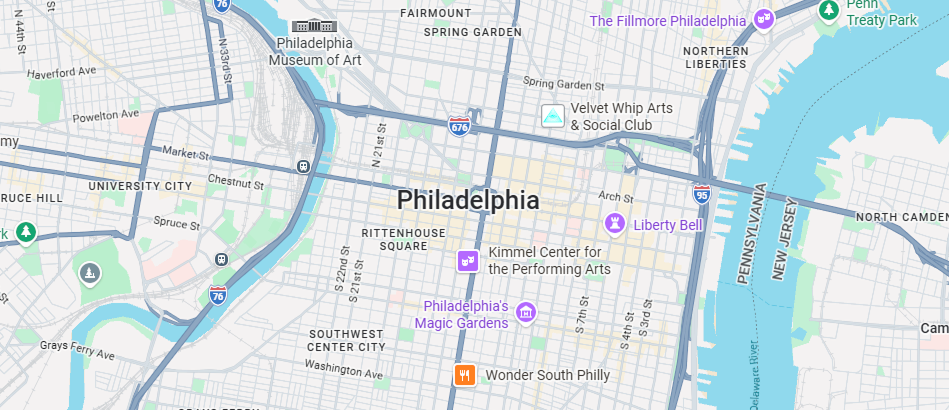
Built for the Companies That Keep This City Running
Philadelphia isn’t just another healthcare market. It’s a city where multiple world-class academic health systems compete, merge, and expand in the same metro. Healthcare and education are the region’s largest employers. The density of hospital systems, pharmaceutical companies, and health plans in one geography creates a compliance environment unlike any other city in the series. That’s exactly where we operate best.
Academic Health Systems
Four Major Academic Systems in One Metro. Every Merger Creates New Compliance Gaps.
Jefferson Health operates 32 hospitals and 700+ care sites with 65,000 employees across eastern Pennsylvania and southern New Jersey, following its merger with Lehigh Valley Health Network. The University of Pennsylvania Health System posted $3.3 billion in quarterly revenue and a $189 million operating profit after acquiring Doylestown Health. Temple Health runs 38 locations and recently opened Temple Women and Families Hospital. Main Line Health serves Philadelphia’s western suburbs. Each system processes massive volumes of PHI, clinical data, and billing records. But here’s what makes Philadelphia unique: every merger creates new EHR integration points, new data migration challenges, and new compliance seams where formerly separate systems must now share patient information securely. The code at those seams is where breaches happen.
Children’s Health & Specialty Care
CHOP Is the Most Profitable Health System in the Region. The Code Must Match.
Children’s Hospital of Philadelphia posted $2.7 billion in revenue and a 6.2% operating margin in the first half of fiscal 2026, making it the most profitable health system in Southeastern Pennsylvania. A $125 million gift from the Roberts family (Comcast CEO) is funding Roberts Children’s Health, expected to launch in 2028 with technology integrated into every patient room. Fox Chase Cancer Center operates under Temple Health. These specialty institutions handle the most sensitive patient populations: pediatric data, cancer treatment records, and clinical trial information. HIPAA protections for pediatric data carry additional requirements, and the institutions serving these populations face heightened scrutiny from regulators and the public alike.
Pharmaceutical Distribution & Life Sciences
Cencora Is the 10th-Largest Company in America. The Supply Chain Code Is Critical.
Cencora, formerly AmerisourceBergen, is headquartered in Conshohocken and ranks 10th on the Fortune 500 with $294 billion in revenue, distributing pharmaceuticals to healthcare providers across the country. The broader Philadelphia-to-New Jersey pharma corridor includes proximity to Johnson and Johnson ($88.8 billion, New Brunswick), GSK, and a dense network of clinical research organizations and biotech startups. The Pennsylvania Biotechnology Center supports early-stage ventures through the Baruch S. Blumberg Institute. These companies handle drug distribution records, clinical trial data, controlled substance tracking, and FDA-regulated submissions. Supply chain integrity, DEA compliance, and security attestation requirements create a compliance surface where one misconfigured integration can disrupt pharmaceutical delivery to thousands of providers.
Health Plans & Insurance
IBX Serves 3 Million People. Jefferson Owns a Health Plan. The Lines Are Blurring.
Independence Blue Cross serves nearly 3 million people and has awarded over $4.8 million in Clinical Care Innovation Grants to regional health systems. Jefferson Health acquired full ownership of Health Partners Plans for $305 million, creating an integrated delivery and financing system that spans 32 hospitals and a health plan. Lincoln National (Fortune 228) provides insurance and investment management from Radnor. This convergence of provider and payer creates a unique compliance challenge: the same organization is now processing both clinical data under HIPAA and insurance data under state insurance regulations and GLBA simultaneously. When the health system is also the insurer, the data governance requirements multiply.
Enterprise Technology & Media
Comcast Runs a $123.7 Billion Empire From Center City
Comcast Corporation generates $123.7 billion in revenue from its Philadelphia headquarters, operating NBCUniversal, Sky, and one of the nation’s largest broadband networks. CEO Brian Roberts and family donated $125 million to CHOP, connecting the city’s largest tech company to its largest children’s hospital. Aramark (Fortune 239, $17.4 billion) provides food service and facilities management. Universal Health Services operates 29 hospitals from King of Prussia. These companies process massive volumes of consumer data, subscriber records, and enterprise customer information. independent security attestation is table stakes for enterprise partnerships, PCI-DSS applies to subscription billing, and the companies skipping compliance-first engineering are losing deals.
Stop Duct-Taping. Start Automating.
Every patch you add to a 15-year-old system is borrowed time. You know the person who built it is gone. You know nobody fully understands what happens when X triggers Y. You know it’s going to break, you just don’t know when.
We go in, map the thing, document it properly, and build a modernization path that doesn’t take your operations offline. Then we find every manual process that should have been automated five years ago and we fix it.
40+
Hours/week recovered through automation
0
Offshore contractors touching
your data
100%
US-based
engineering team
1
Point of contact who actually
knows your stack

If You Handle Sensitive Data,
You Have Compliance Obligations. Full Stop.
We don’t just build software. We build software designed to hold up under an OCR investigation, a payer audit, and a security review. We engineer with compliance in the architecture, not bolted on at the end.
HIPAA
Healthcare data, PHI handling, multi-state health system and provider requirements
HITRUST
CSF certification, risk-based controls, healthcare security framework alignment
GLBA
Financial data privacy, Safeguards Rule, policyholder and consumer protection
The Comparison Your CFO Needs To See
Offshore looks cheaper until you run the real numbers. Vibe coding looks faster until the auditor shows up.
Here’s what the comparison actually looks like.
Hoyack Core Service |
Hoyack (Onshore) |
Offshore/Vibe Coding |
|
Code practices built with HIPAA requirements in mind |
Built in from day one |
Assumed, rarely verified |
|
Data stays onshore (US soil) |
Guaranteed |
Often unclear or outright no |
|
Audit-ready code and logs |
Architected for it |
Retroactive fixes required |
|
Code review by human engineers |
Every commit |
AI-gen code often skipped |
|
Cyber insurance eligibility |
Documented & defensible |
Increasingly at risk |
|
Legacy system knowledge transfer |
Full documentation |
Knowledge walks when contract ends |
|
Real total cost (incl. rework, risk, delay) |
Predictable |
Unpredictable & compounding |
If You’re Not Sure Where Your Gaps Are, That’s the Problem.
We’ll do a no-pressure technical assessment of your current stack, compliance posture, and automation opportunities. You’ll walk away knowing exactly what’s at risk, and what it takes to fix it.