Boston & Cambridge, Massachusetts
Where Drugs Are Invented, Tested, and Brought
to Market. Every Step Generates Regulated Data.
1,000+ life science companies. 18 of the top 20 biopharma firms. 115,000+ biotech jobs. 15% of all U.S. drug pipeline candidates. $1.3 billion in NIH funding in Longwood alone. Vertex, Moderna, Biogen, Mass General Brigham, athenahealth. Seven Fortune 500 headquarters in Boston proper. We’re the onshore engineering team that keeps the code behind it documented and audit-ready.

Vibe Coding Just Shipped to a Clinical Trial Data Platform
AI-generated code ships fast and looks clean. Until the FDA auditor or your 21 CFR Part 11 reviewer finds the gap. When your code manages genomic data, clinical trial records, or drug candidate pipelines in Kendall Square, “it passed review” is the beginning of an FDA finding.
Your Offshore Team Has Access to Drug Development Data
FDA 21 CFR Part 11, HIPAA, and GxP don’t care where your contractor sits. If they’re touching clinical trial records, patient genomic data, or proprietary drug formulations from overseas, you’re exposed across multiple regulatory agencies and your IP is at risk.
Your Research Platform Was Built Before the Last FDA Guidance
One bad deployment, one missed dependency, one new engineer touching the wrong module, and your clinical data management, regulatory submission pipeline, or EHR integration goes dark. In a city where 15% of the nation’s drug candidates are in development, that’s not a bug. It’s a pipeline delay measured in years and billions.
The Risks Nobody Talks About Until It’s Too Late
01
Vibe Coding Is an FDA Finding Waiting to Happen
Your dev team is using AI to ship faster. That’s fine. Until it isn’t. AI-generated code doesn’t get reviewed the way human-written code does. It introduces logic errors, insecure dependencies, and auth gaps that slip through because nobody fully understands what was generated. In the world’s densest biotech cluster, where code manages clinical trial data, processes genomic sequences, and supports FDA regulatory submissions, one unchecked endpoint isn’t just a bug. It’s a 21 CFR Part 11 violation, a clinical hold, and a drug development delay that costs your investors years of runway.
02
Offshore Isn’t Cheaper When Drug IP Leaves the Country
The hourly rate looks great. Then you add: timezone delays, miscommunication overhead, rework cycles, and the realization that proprietary drug formulations, clinical trial protocols, genomic datasets, and regulatory submission records left the country. Boston’s biotech companies hold some of the most valuable intellectual property in the world. FDA 21 CFR Part 11 requires validated systems with complete audit trails. One overseas exposure and your cost savings become an IP theft risk, a regulatory violation, and a due diligence failure that kills your next fundraise.
03
Your Research Platform Is Held Together With Duct Tape
You’ve been adding to it, patching it, hiring contractors to “just keep it running.” But nobody really knows how all of it fits together anymore. The original dev left during the last funding cycle. The documentation was written for a prototype that became production. One bad update, one deprecated library, one new integration, and your clinical data management, lab information system, or regulatory filing pipeline goes dark.
04
Compliance Gaps Don’t Wait for Your Next Funding Round
FDA 21 CFR Part 11, HIPAA, GxP, ICH guidelines. These aren’t annual checkboxes. They’re continuous requirements. Every new integration, every new team member, every infrastructure change is a potential gap. With 1,000+ life science companies and 15% of all U.S. pipeline candidates based in Massachusetts, the FDA and OCR aren’t short on targets. The companies we talk to are almost always surprised to learn how many gaps they have.
05
Cyber Insurers Are Auditing Biotech and Health IT Code
The days of filling out a form and getting a policy are over. Underwriters are asking technical questions calibrated to biopharma and health IT. Do you have MFA? How is your code reviewed? What’s your incident response plan? Are your systems FDA-validated? If vibe-coded features are processing clinical data, managing patient records, or supporting drug submissions with no audit trail, your claim could be denied. Or your premium just tripled.
06
You’re Automating the Easy Parts, Not the Expensive Ones
Most teams automate the easy stuff. The hard stuff (legacy clinical data workflows, manual FDA submission documentation, cross-system lab integrations, regulatory reporting pipelines) stays manual because nobody wants to touch it. That’s exactly where your operational costs are hiding. We’ve seen biotech and health IT companies cut 40+ hours of manual work per week by automating the workflows everyone assumed were too complicated.
Built for the Companies That Keep This City Running
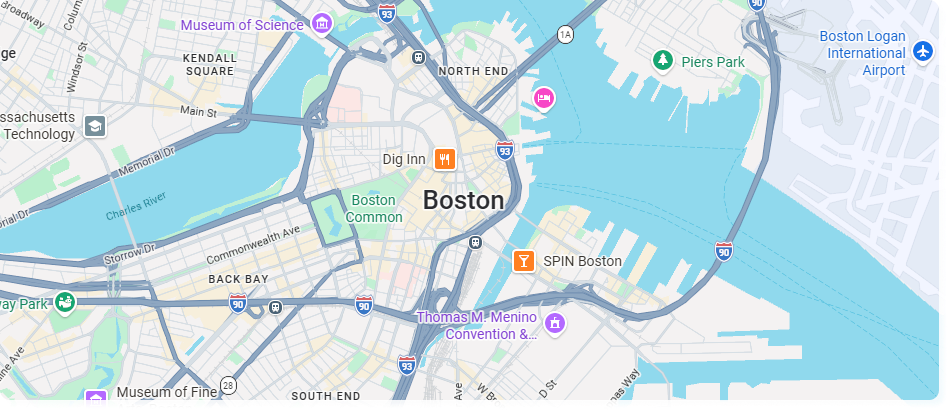
Boston isn’t just another healthcare market. It’s where drugs are discovered in Kendall Square labs, tested in Longwood hospitals, and brought to market through the densest biotech ecosystem on Earth. 18 of the top 20 biopharma companies have operations here. Massachusetts ranks #1 in NIH funding, #1 in life science employment concentration, and hosts roughly 15% of all U.S. drug pipeline candidates. That’s exactly where we operate best.
Biopharma & Drug Development
Kendall Square Has 120 Biotech Companies Within a Mile. The Code Behind Them Must Be FDA-Ready.
Vertex Pharmaceuticals forecasts $11.75-$12 billion in 2025 revenue, driven by its cystic fibrosis franchise and the FDA-approved nonopioid painkiller Journavx. Moderna partnered with IBM to integrate generative AI and quantum computing into its mRNA development platform. Biogen signed a 15-year lease for a new 580,000-square-foot global headquarters in Kendall Commons. Alnylam markets four FDA-approved RNAi therapies. CRISPR Therapeutics is advancing gene editing from Cambridge. Eli Lilly invested $700 million in a genetic medicine research center in the Seaport. Every one of these companies processes clinical trial data, genomic sequences, and proprietary drug formulations under FDA 21 CFR Part 11, GxP, and HIPAA obligations. The code managing this data must be validated, auditable, and compliant from day one. There are no retroactive fixes in a regulatory submission.
Academic Medical Centers & Research Hospitals
$1.3 Billion in NIH Funding in Longwood Alone. More Than 44 Entire States.
The Longwood Medical and Academic Area houses 21 medical, academic, and research institutions employing 73,000 people. It received $1.3 billion in NIH funding in fiscal 2024, more than 44 individual U.S. states. Mass General Brigham is the state’s largest health system with $2.4 billion in net gains. Dana-Farber Cancer Institute is among the world’s leading cancer research centers. Boston Children’s Hospital is consistently ranked the #1 pediatric hospital in the country. Harvard Medical School and the Broad Institute (co-founded by Harvard and MIT) anchor the research pipeline. These institutions process massive volumes of PHI, clinical research data, and genomic information. HIPAA, institutional data governance, and the NIH data sharing requirements that come with $1.3 billion in federal funding create compliance surfaces unlike anything in clinical care alone.
Health IT & Digital Health
athenahealth Was Built Here. The Health IT Ecosystem Keeps Growing.
athenahealth, headquartered in Boston, provides cloud-based EHR, practice management, and revenue cycle management to healthcare providers nationwide. Bain Capital and Hellman & Friedman acquired it for $17 billion. Definitive Healthcare provides healthcare commercial intelligence. The broader ecosystem includes hundreds of health IT startups building clinical decision support, patient engagement, telehealth, and digital therapeutics platforms. Boston’s 250,000+ tech workers and 30+ universities create the talent pipeline. These companies handle PHI, clinical workflows, and billing data under HIPAA and security attestation obligations that multiply with every new provider customer and every new EHR integration. When your platform processes data for thousands of practices, one misconfigured API affects millions of patient records.
Gene Editing & Advanced Therapies
The Gene Therapy Revolution Started Here. The Regulatory Complexity Is Unprecedented.
Cambridge is home to three of the world’s leading gene editing companies: Editas Medicine, Intellia Therapeutics, and CRISPR Therapeutics. Ginkgo Bioworks is advancing synthetic biology from the Seaport. The Broad Institute’s genome-focused research employs thousands in Kendall Square. CMS announced outcome-based payment agreements with Vertex and Bluebird Bio for gene therapies in late 2024. These companies operate at the frontier of medicine, where the code managing cell manufacturing processes, patient dosing records, and regulatory submissions must meet standards that don’t exist yet in traditional pharma. FDA guidance for gene therapies is evolving in real time, and the platforms supporting these programs must be flexible enough to adapt while maintaining complete validation and audit trails.
Financial Services & Insurance
State Street, Liberty Mutual, and the Financial Backbone
State Street Corporation manages trillions in assets from Boston. Liberty Mutual is one of the largest property and casualty insurers in the country. Fidelity Investments operates major facilities throughout the metro. These institutions process customer financial data, investment records, and insurance claims under GLBA, and PCI-DSS obligations. Boston’s financial services sector provides the capital infrastructure that funds the biotech ecosystem, and the technology platforms connecting these worlds (health plan data to clinical research, insurance claims to treatment outcomes) create compliance surfaces that span both healthcare and financial regulatory frameworks simultaneously.
Stop Duct-Taping. Start Automating.
Every patch you add to a 15-year-old system is borrowed time. You know the person who built it is gone. You know nobody fully understands what happens when X triggers Y. You know it’s going to break, you just don’t know when.
We go in, map the thing, document it properly, and build a modernization path that doesn’t take your operations offline. Then we find every manual process that should have been automated five years ago and we fix it.
40+
Hours/week recovered through automation
0
Offshore contractors touching
your data
100%
US-based
engineering team
1
Point of contact who actually
knows your stack

If You Handle Sensitive Data,
You Have Compliance Obligations. Full Stop.
We don’t just build software. We build software designed to hold up under an FDA inspection, an OCR investigation, and a security review. We engineer with compliance in the architecture, not bolted on at the end.
FDA 21 CFR
Electronic records, validated systems, audit trails, clinical and manufacturing software
HIPAA
Healthcare data, PHI handling, research hospital and provider requirements
GxP
Good practice compliance for clinical, laboratory, and manufacturing systems
The Comparison Your CFO Needs To See
Offshore looks cheaper until you run the real numbers. Vibe coding looks faster until the auditor shows up.
Here’s what the comparison actually looks like.
Hoyack Core Service |
Hoyack (Onshore) |
Offshore/Vibe Coding |
|
Code practices built with HIPAA requirements in mind |
Built in from day one |
Assumed, rarely verified |
|
Data stays onshore (US soil) |
Guaranteed |
Often unclear or outright no |
|
Audit-ready code and logs |
Architected for it |
Retroactive fixes required |
|
Code review by human engineers |
Every commit |
AI-gen code often skipped |
|
Cyber insurance eligibility |
Documented & defensible |
Increasingly at risk |
|
Legacy system knowledge transfer |
Full documentation |
Knowledge walks when contract ends |
|
Real total cost (incl. rework, risk, delay) |
Predictable |
Unpredictable & compounding |
If You’re Not Sure Where Your Gaps Are, That’s the Problem.
We’ll do a no-pressure technical assessment of your current stack, compliance posture, and automation opportunities. You’ll walk away knowing exactly what’s at risk, and what it takes to fix it.