San Diego, California
Where Naval Information Warfare Meets the
Wireless Capital of the World. Both Need Airtight Code.
$61.3 billion in military economic output. 357,000 defense-connected jobs. NAVWAR headquarters with a $9.7 billion annual budget. Naval Base San Diego homeports the Pacific Fleet. $19.8 billion in defense contracts to 2,000+ companies. Qualcomm invented 3G, 4G, and 5G here. 3,100+ software establishments. We’re the onshore engineering team that keeps the code behind it documented and audit-ready.

Vibe Coding Just Shipped to a Naval C4I System
AI-generated code ships fast and looks clean. Until the NAVWAR security review or CMMC assessor finds the gap. When your code touches fleet communications, cybersecurity platforms, or multi-domain warfare systems, “it passed review” isn’t a defense. It’s a fleet-wide vulnerability.
Your Offshore Team Has Access to Fleet Network Data
ITAR, CMMC, and DFARS don’t care where your contractor sits. If they’re touching naval communication systems, ship network architectures, or cybersecurity tool specifications from overseas, you’re disqualified from the contract. In San Diego, that’s $19.8 billion in annual contracts you can’t compete for.
Your Platform Was Built Before the Pacific Strategy Shift
The national defense strategy is shifting toward the Pacific. San Diego is the principal homeport of the Pacific Fleet. The systems supporting 50+ ships, NAVWAR’s cyber mission, and 357,000 military-connected jobs are being asked to scale. Systems built for a smaller footprint will break under the new operational tempo.
The Risks Nobody Talks About Until It’s Too Late
01
Vibe Coding Is a Fleet-Wide Vulnerability Waiting to Happen
Your dev team is using AI to ship faster. That’s fine. Until it isn’t. AI-generated code doesn’t get reviewed the way human-written code does. It introduces logic errors, insecure dependencies, and auth gaps that slip through because nobody fully understands what was generated. In a city where NAVWAR develops and acquires networks and cyber systems for the entire Navy, one unchecked endpoint isn’t just a bug. It’s a vulnerability in the fleet’s information warfare backbone. NAVWAR’s mission is cybersecurity. The code supporting that mission must be held to an even higher standard.
02
Offshore Isn’t an Option When Naval Networks Are Involved
This isn’t about cost savings. It’s about eligibility and national security. ITAR prohibits sharing defense technical data with foreign nationals. CMMC requires protecting CUI within U.S.-controlled environments. NAVWAR handles naval communication systems, cybersecurity tools, and electronic warfare platforms. $19.8 billion in defense contracts flow to 2,000+ San Diego companies annually. If your offshore team has access to any of this data, you’re disqualified from competing in what is the largest military economy of any metropolitan area in the United States.
03
The Pacific Pivot Is Scaling Everything at Once
The national defense strategy’s shift toward the Pacific makes San Diego the front door. Naval Base San Diego is the second-largest Surface Ship base in the Navy and the principal homeport of the Pacific Fleet with 50+ ships. A projected 7% increase in economic impact reflects additional vessel assignments. Every system supporting fleet readiness, shipbuilding, and naval information warfare is being asked to handle more. Systems designed for a smaller footprint are being stretched to their limits.
04
CMMC 2.0 Is Here and 2,000+ Contractors Are in the Crosshairs
CMMC is no longer theoretical. The DoD is requiring certified compliance as a condition of contract award. Level 2 requires third-party assessments against 110 NIST SP 800-171 controls. San Diego has 2,000+ companies receiving defense contracts. NAVWAR alone generates 18,800 local jobs across its direct workforce and contractor base. The primes are flowing CMMC requirements down to every tier. Self-attestation is no longer sufficient. The companies investing in compliance-first engineering now are the ones that will still be winning contracts in two years.
05
Cyber Insurers Are Asking Defense-Grade Questions
The days of filling out a form and getting a policy are over. Underwriters are asking technical questions calibrated to the defense and cybersecurity sectors. Do you have MFA everywhere? How is your code reviewed? What’s your incident response plan? If vibe-coded features are processing fleet communications, cyber defense tools, or classified network data with no audit trail, your claim could be denied. Or your premium just tripled.
06
You’re Automating the Easy Parts, Not the Expensive Ones
Most teams automate the easy stuff. The hard stuff (legacy fleet management workflows, manual CMMC evidence collection, cross-system integration pipelines, compliance documentation for subcontractor certifications) stays manual because nobody wants to touch it. That’s exactly where your operational costs are hiding. We’ve seen defense and tech companies cut 40+ hours of manual work per week by automating the workflows everyone assumed were too complicated.
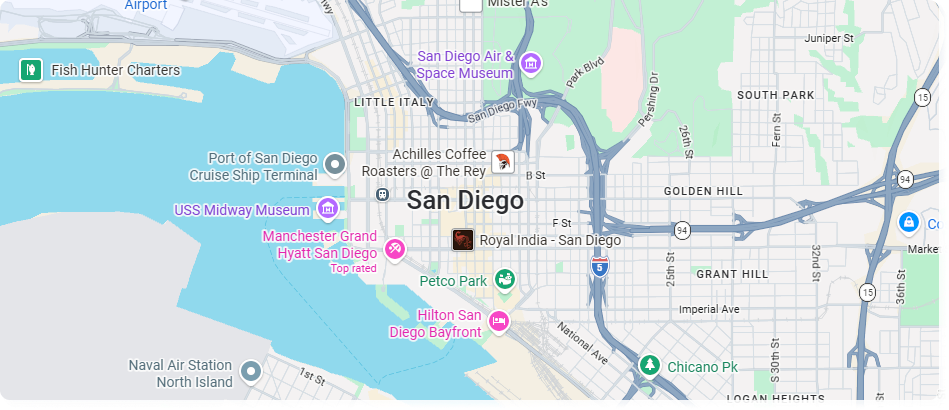
Built for the Companies That Keep This City Running
San Diego isn’t just another defense town. It’s where the Navy’s entire information warfare enterprise is headquartered, where the Pacific Fleet calls home, where Qualcomm invented the wireless era, and where 2,000+ companies compete for $19.8 billion in defense contracts every year. Defense contributes 20% of the region’s GDP. That’s exactly where we operate best.
Naval Information Warfare & Cybersecurity
NAVWAR: A $9.7 Billion Budget, 5,300 Direct Employees, and the Navy’s Cyber Backbone
NAVWAR is headquartered in San Diego with a $9.7 billion annual budget and 5,300 direct employees. The command develops, acquires, and secures networks and cyber systems for the entire Navy. Its total economic impact is $3.3 billion, generating 18,800 local jobs. 37% of the NAVWAR workforce holds master’s or doctoral degrees. The command competes for the same talent pool as Qualcomm, Google, and Apple. Top NAVWAR contractors include Booz Allen Hamilton ($267.7 million), Viasat ($233.8 million), and SAIC ($116.9 million). NAVWAR is planning a state-of-the-art facility replacement for its current WWII-era buildings on Pacific Highway. Every contractor supporting this command handles naval communication systems, cybersecurity platforms, and electronic warfare data under CMMC, ITAR, and the most stringent classification requirements in the defense industrial base.
Naval Operations & Fleet Readiness
50+ Ships. Pacific Fleet Homeport. The Systems Must Scale With the Mission.
Naval Base San Diego is the second-largest Surface Ship base in the U.S. Navy and the principal homeport of the Pacific Fleet with 50+ ships and 190 tenant commands. Camp Pendleton is the largest Marine Corps base on the West Coast. NASSCO (General Dynamics) is the only major shipyard on the West Coast building large Navy vessels. The national defense strategy’s shift toward the Pacific is projected to increase San Diego’s military economic impact by 7%, with additional vessel assignments possible. The fleet support ecosystem spans shipbuilding and repair, logistics, maintenance management, and operational readiness systems. Every platform handling ship maintenance records, fleet logistics data, and operational planning information carries CMMC and security attestation obligations that multiply with the Pacific pivot.
Defense Contractors & Systems Integrators
$19.8 Billion in Annual Defense Contracts to 2,000+ Companies
San Diego’s defense contractor ecosystem receives $19.8 billion in annual defense contracts distributed across more than 2,000 companies. General Atomics, headquartered in San Diego, is the leading manufacturer of unmanned aerial systems including the MQ-9 Reaper. Viasat provides satellite and tactical data link systems. SAIC delivers IT modernization and systems integration. BAE Systems, Leidos, and L3Harris maintain major San Diego operations. Direct defense spending in the region totals $39.3 billion, including $15.1 billion in military payroll and $4.3 billion in retirement and veterans’ benefits. This is the largest military economy of any metropolitan area in the country. Every tier of this ecosystem carries CMMC obligations flowing down from the primes, and compliance failure costs access to the entire market.
Wireless Technology & Commercial Innovation
UC San Diego Is Building the Bridge Between Entrepreneurs and the Pentagon
UC San Diego’s Innovating for National Security (i4NS) program connects entrepreneurs and academic researchers directly to Department of Defense needs. The Rady School of Management produces the annual Military Economic Impact Report that quantifies San Diego’s defense footprint. San Diego State University and other regional universities provide the workforce pipeline. The $42 million Haybarn Energy Reliability Center at Camp Pendleton, funded by a California Energy Commission grant, advances energy resilience and microgrid technology for military installations. These research programs and innovation bridges handle CUI, proprietary designs, and DoD-funded intellectual property under compliance frameworks that span CMMC, ITAR, and institutional data governance simultaneously.
Research, University Partnerships & Defense Innovation
UC San Diego Is Building the Bridge Between Entrepreneurs and the Pentagon
UC San Diego’s Innovating for National Security (i4NS) program connects entrepreneurs and academic researchers directly to Department of Defense needs. The Rady School of Management produces the annual Military Economic Impact Report that quantifies San Diego’s defense footprint. San Diego State University and other regional universities provide the workforce pipeline. The $42 million Haybarn Energy Reliability Center at Camp Pendleton, funded by a California Energy Commission grant, advances energy resilience and microgrid technology for military installations. These research programs and innovation bridges handle CUI, proprietary designs, and DoD-funded intellectual property under compliance frameworks that span CMMC, ITAR, and institutional data governance simultaneously.
Stop Duct-Taping. Start Automating.
Every patch you add to a 15-year-old system is borrowed time. You know the person who built it is gone. You know nobody fully understands what happens when X triggers Y. You know it’s going to break, you just don’t know when.
We go in, map the thing, document it properly, and build a modernization path that doesn’t take your operations offline. Then we find every manual process that should have been automated five years ago and we fix it.
40+
Hours/week recovered through automation
0
Offshore contractors touching
your data
100%
US-based
engineering team
1
Point of contact who actually
knows your stack

If You Handle Sensitive Data,
You Have Compliance Obligations. Full Stop.
We don’t just build software. We build software designed to hold up under an assessment, a NAVWAR security review, and an ITAR audit. We engineer with compliance in the architecture, not bolted on at the end.
CMMC
Level 2 assessment readiness, CUI protection, NIST 800-171 control implementation
ITAR
Missile technology export controls, defense article restrictions, U.S. person requirements
DFARS
Defense procurement compliance, 252.204-7012 cyber incident reporting, CUI safeguards
The Comparison Your CFO Needs To See
Offshore looks cheaper until you run the real numbers. Vibe coding looks faster until the auditor shows up.
Here’s what the comparison actually looks like.
Hoyack Core Service |
Hoyack (Onshore) |
Offshore/Vibe Coding |
|
HIPAA & compliance-safe code practices |
Built in from day one |
Assumed, rarely verified |
|
Data stays onshore (US soil) |
Guaranteed |
Often unclear or outright no |
|
Audit-ready code and logs |
Architected for it |
Retroactive fixes required |
|
Code review by human engineers |
Every commit |
AI-gen code often skipped |
|
Cyber insurance eligibility |
Documented & defensible |
Increasingly at risk |
|
Legacy system knowledge transfer |
Full documentation |
Knowledge walks when contract ends |
|
Real total cost (incl. rework, risk, delay) |
Predictable |
Unpredictable & compounding |
If You’re Not Sure Where Your Gaps Are, That’s the Problem.
We’ll do a no-pressure technical assessment of your current stack, compliance posture, and automation opportunities. You’ll walk away knowing exactly what’s at risk, and what it takes to fix it.