Kansas City, Missouri
This City Built the Back Office of American Finance.
The Legacy Code Is Still Running.
Kansas City is where DST Systems processed 110 million investor positions, where Cerner pioneered health IT for 40 years, and where Fiserv is building a 2,000-job fintech hub. Over 120 digital health companies. 10,000 credentialed cybersecurity workers. We’re the onshore engineering team that keeps legacy and modern systems alike documented and audit-ready.

The System Processing Your Investor Accounts Was Built in the ’90s
DST Systems built the recordkeeping backbone for the American mutual fund industry right here. Those systems were acquired, layered, and patched. The original architects are long gone. The compliance surface has only grown.
AI-Generated Code Is Touching EHR Integrations
Oracle Health (formerly Cerner) kickstarted KC’s health IT sector 40 years ago. Now 120+ digital health companies build on that foundation. Vibe-coded features touching patient data don’t survive HIPAA scrutiny.
Your Offshore Team Has Access to Financial and Patient Data
HIPAA, PCI-DSS, and GLBA don’t care where your contractor sits. In a city where financial services and health IT share the same talent pool, an offshore team with broad access is a dual-domain liability.
The Risks Nobody Talks About Until It’s Too Late
01
Vibe Coding Is a Compliance Breach Waiting to Happen
Your dev team is using AI to ship faster. That’s fine. Until it isn’t. AI-generated code doesn’t get reviewed the way human-written code does. It introduces logic errors, insecure dependencies, and auth gaps that slip through code review because nobody fully understands what was generated. In a city where legacy financial systems and health IT platforms process some of the most sensitive data in the country, one unchecked endpoint can trigger investigations from multiple regulatory agencies simultaneously.
02
Offshore Isn’t Cheaper When Regulated Data Leaves the Country
The hourly rate looks great. Then you add: timezone delays, miscommunication overhead, rework cycles, and the realization that investor account records, patient health information, and proprietary financial data left the country. Kansas City’s companies operate under overlapping financial and healthcare regulatory frameworks. HIPAA, GLBA, and PCI-DSS don’t care where your contractor sits. One overseas exposure and your compliance posture collapses across multiple domains.
03
Your Legacy System Is One Change Away From Failure
You’ve been adding to it, patching it, hiring contractors to “just keep it running.” But nobody really knows how all of it fits together anymore. The original dev left years ago. The documentation is a lie. Kansas City has decades of legacy financial services and health IT infrastructure still in production. One bad update, one deprecated library, one new integration, and account processing, patient records, or claims pipelines go dark.
04
Compliance Gaps Don’t Wait for Your Renewal Date
HIPAA, PCI-DSS, GLBA. These aren’t annual checkboxes. They’re continuous requirements. Every new integration, every new team member, every infrastructure change is a potential gap. With 120+ digital health companies and a growing fintech sector all under regulatory scrutiny, auditors aren’t short on targets. The companies we talk to are almost always surprised to learn how many gaps they have.
05
Cyber Insurers Are Auditing Financial and Health IT Code
The days of filling out a form and getting a policy are over. Underwriters are asking technical questions, especially when financial records and patient data are involved. Do you have MFA? How is your code reviewed? What’s your incident response plan? If vibe-coded features are processing investor accounts or patient records with no audit trail, your claim could be denied. Or your premium just tripled.
06
You’re Automating the Easy Parts, Not the Expensive Ones
Most teams automate the easy stuff. The hard stuff (legacy recordkeeping workflows, manual compliance reporting, cross-system claims integrations, financial reconciliation pipelines) stays manual because nobody wants to touch it. That’s exactly where your operational costs are hiding. We’ve seen financial services and health IT companies cut 40+ hours of manual work per week by automating the workflows everyone assumed were too complicated.
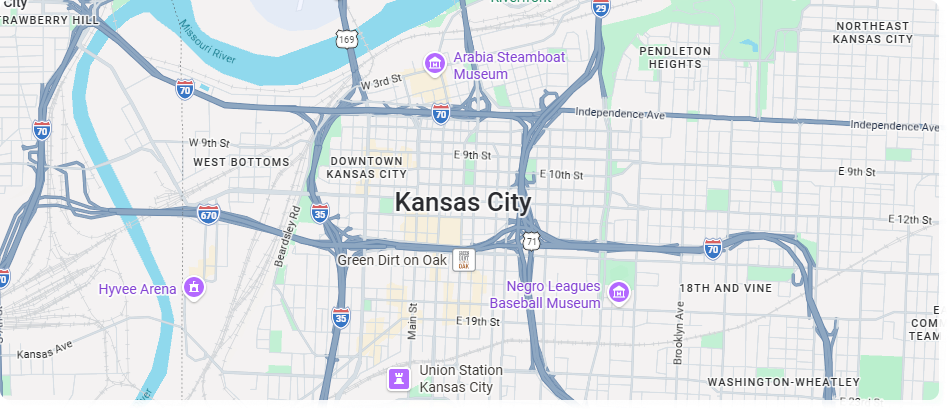
Built for the Companies That Keep This City Running
Kansas City isn’t just another Midwest market. It’s where DST Systems built the recordkeeping infrastructure for the American mutual fund industry, where Cerner pioneered electronic health records, and where Fiserv is planting its next major fintech hub. Financial services and health IT have been intertwined here for decades. That’s exactly where we operate best.
Payments Infrastructure & Financial Services
The Back Office of American Finance Still Runs From Here
DST Systems processed over 110 million investor positions before SS&C Technologies acquired it for $5.4 billion. That infrastructure, now operating as SS&C GIDS, still runs from Kansas City and serves 13,000+ financial services clients worldwide. Fiserv is opening a 2,000-job Strategic Fintech Hub in Overland Park beginning in 2026. UMB Financial, H&R Block, and the Federal Reserve Bank of Kansas City round out a financial services ecosystem with deep roots. These systems process investor accounts, retirement records, tax data, and payment transactions. Every one of them carries PCI-DSS, and GLBA obligations that compound with every legacy integration still in production.
Health IT & Digital Health
40 Years of Health IT Legacy. 120+ Companies Building on It.
Cerner pioneered the electronic health record from Kansas City starting in 1979. Oracle acquired it for $28 billion in 2022, and Oracle Health’s world headquarters remains in North Kansas City, serving 9.5 million customers globally. That 40-year head start created an ecosystem: more than 120 digital health companies and 25,000 professionals now operate in the region. Netsmart, WellSky, and Bardavon all build health IT solutions from KC. Every platform touching patient data, clinical workflows, or claims processing carries HIPAA obligations that multiply with every new client and every new integration.
Animal Health & Life Sciences
The Global Center of Animal Health Has Data Obligations Too
The Kansas City Animal Health Corridor is recognized as the global epicenter of animal health innovation. The region is home to major animal health companies, diagnostic firms, and a growing cluster of veterinary biotech startups. Merck Animal Health is investing $895 million in its De Soto plant expansion. These companies handle proprietary research data, regulatory submission records, and increasingly complex digital platforms. FDA veterinary product regulations, data integrity requirements, and the security expectations of global supply chain partners all require compliance-first engineering. Offshore contractors and unreviewed AI-generated code don’t belong near regulated production systems.
Cybersecurity
10,000 Credentialed Workers Protecting Everyone Else’s Data
Kansas City has quietly built one of the most concentrated cybersecurity workforces in the country: 10,000 credentialed professionals protecting financial services, health IT, government, and defense infrastructure. The region’s proximity to Whiteman Air Force Base and Fort Leavenworth, combined with its deep financial services and health IT roots, creates a natural demand for companies building security tools, compliance platforms, and managed detection and response services. These companies carry serious data obligations across CMMC, and the overlapping requirements of serving both commercial and government clients.
Enterprise Technology & Telecom
Sprint’s Legacy Lives On in KC’s Enterprise Tech DNA
Sprint built its global operations from Overland Park before the T-Mobile merger, and that telecom infrastructure DNA still shapes Kansas City’s enterprise tech talent pool. Garmin designs and manufactures GPS navigation, wearables, and aviation technology from Olathe, processing massive volumes of user data and telemetry. These companies carry complex data obligations across consumer privacy, PCI-DSS for payment-enabled devices, for enterprise partnerships. Cloud infrastructure, customer data, and IoT platforms all require compliance-first engineering that can’t be duct-taped on after launch.
Stop Duct-Taping. Start Automating.
Every patch you add to a 15-year-old system is borrowed time. You know the person who built it is gone. You know nobody fully understands what happens when X triggers Y. You know it’s going to break, you just don’t know when.
We go in, map the thing, document it properly, and build a modernization path that doesn’t take your operations offline. Then we find every manual process that should have been automated five years ago and we fix it.
40+
Hours/week recovered through automation
0
Offshore contractors touching
your data
100%
US-based
engineering team
1
Point of contact who actually
knows your stack

If You Handle Sensitive Data,
You Have Compliance Obligations. Full Stop.
We don’t just build software. We build software designed to hold up under an audit. Whether you’re preparing for security reviews, building to HIPAA requirements, or pursuing a DoD contract, we engineer with compliance in the architecture, not bolted on at the end.
HIPAA
Healthcare data, PHI handling, covered entity and Business Associate requirements
PCI-DSS
Payment card security, transaction systems, financial infrastructure
GLBA
Financial data privacy, Safeguards Rule, investor and consumer protection
The Comparison Your CFO Needs To See
Offshore looks cheaper until you run the real numbers. Vibe coding looks faster until the auditor shows up.
Here’s what the comparison actually looks like.
Hoyack Core Service |
Hoyack (Onshore) |
Offshore/Vibe Coding |
|
Code practices built with HIPAA requirements in mind |
Built in from day one |
Assumed, rarely verified |
|
Data stays onshore (US soil) |
Guaranteed |
Often unclear or outright no |
|
Audit-ready code and logs |
Architected for it |
Retroactive fixes required |
|
Code review by human engineers |
Every commit |
AI-gen code often skipped |
|
Cyber insurance eligibility |
Documented & defensible |
Increasingly at risk |
|
Legacy system knowledge transfer |
Full documentation |
Knowledge walks when contract ends |
|
Real total cost (incl. rework, risk, delay) |
Predictable |
Unpredictable & compounding |
If You’re Not Sure Where Your Gaps Are, That’s the Problem.
We’ll do a no-pressure technical assessment of your current stack, compliance posture, and automation opportunities. You’ll walk away knowing exactly what’s at risk, and what it takes to fix it.